Guides
Cargo Electric Tricycles on the Farm: Harvests, Feed, Water and Building Materials
How farms and rural operators use cargo electric tricycles for harvests, feed, water and building materials — and which box, axle and battery choices fit rough rural work.
Cargo electric tricycles earn their keep in the countryside because farm work is mostly short trips with heavy loads — exactly the work a small electric cargo vehicle does well. If you sell into rural markets, these are the jobs your customers will actually use the vehicle for, and the configurations each job needs.
Before the job-by-job breakdown, one principle runs through all rural work: the vehicle earns its money on the worst day of the season, not the average day. A tricycle that copes on a light dry-season Tuesday but struggles during harvest week, or on a rain-softened track fully loaded, comes back as complaints. So as you read each job below, think in terms of the heaviest load, the worst road and the longest day — and specify the vehicle for that day.
1. Bringing in the harvest
During harvest weeks the same vehicle runs from field to collection point or village market all day: vegetables, fruit, grain, coffee, cocoa — whatever the region grows. Loads are bulky rather than dense, trips repeat on a fixed route, and ground clearance matters more than speed. An open box with drop sides suits crate and sack loading; a tarp or simple cover protects produce from sun and dust.
A few extra checks for harvest work:
- Box volume matters more than box weight rating here. Crates and baskets fill a box long before they overload it. Measure the crate size your growers actually use, and confirm the internal box dimensions — length, width and wall height — fit a sensible number of crates without awkward overhang.
- Loading height decides how tired the crew gets. Drop sides or a low load bed make a real difference when hundreds of crates are lifted by hand in a day. If your customers load from field level, ask about side-opening or drop-side options and confirm them in writing before ordering.
- Short harvest windows punish breakdowns. A vehicle that stops for three days in a three-week harvest loses a large share of its yearly value to the farmer. That is why harvest buyers should order a basic wear-parts kit with the vehicle — front shock absorbers, brake parts and tyres at minimum — rather than discovering parts lead times mid-season.
- Sun and dust protection is cheap insurance. A simple tarp or cover keeps produce saleable and keeps dust out of the load. It costs little compared with a rejected load at the collection point.
2. Feed, fertiliser and farm inputs
The return trip rarely runs empty: feed sacks, fertiliser, seed and tools go back out to the farm. These loads are dense and heavy for their size, so this is where rated payload stops being a brochure number. Match the vehicle's rated payload — confirmed with your supplier in writing — to the heaviest typical load, not the average one.
Worked example: a dealer who sizes a vehicle around a typical load of a few feed sacks hears no complaints in the first month. They start when a farmer loads it for a neighbour as a favour, or stacks a whole planting week's fertiliser into one trip. Rural vehicles are loaded by eye, not by scale. The practical defences are simple:
- Choose the rated payload for the heaviest realistic load, with a margin for the way people actually load.
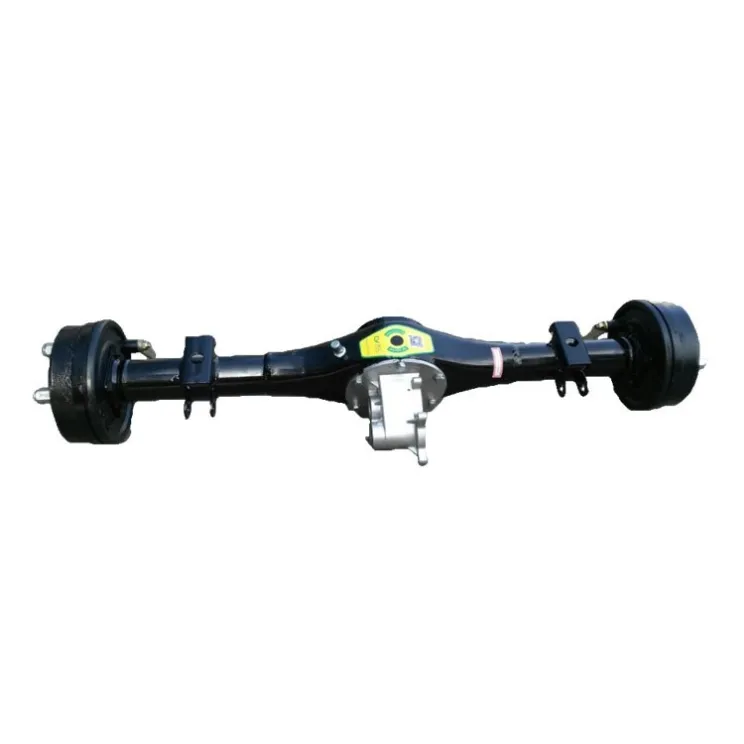
- Ask the supplier which components change between the standard and heavy-duty configuration — rear axle, suspension, box reinforcement — and get the answer in writing, so what you ordered is what arrives.
- Tell your retail customers plainly what the rated payload is, and put it in your own sales documents. Overloading arguments are much easier when the number was in writing from the start.
3. Carrying water and containers
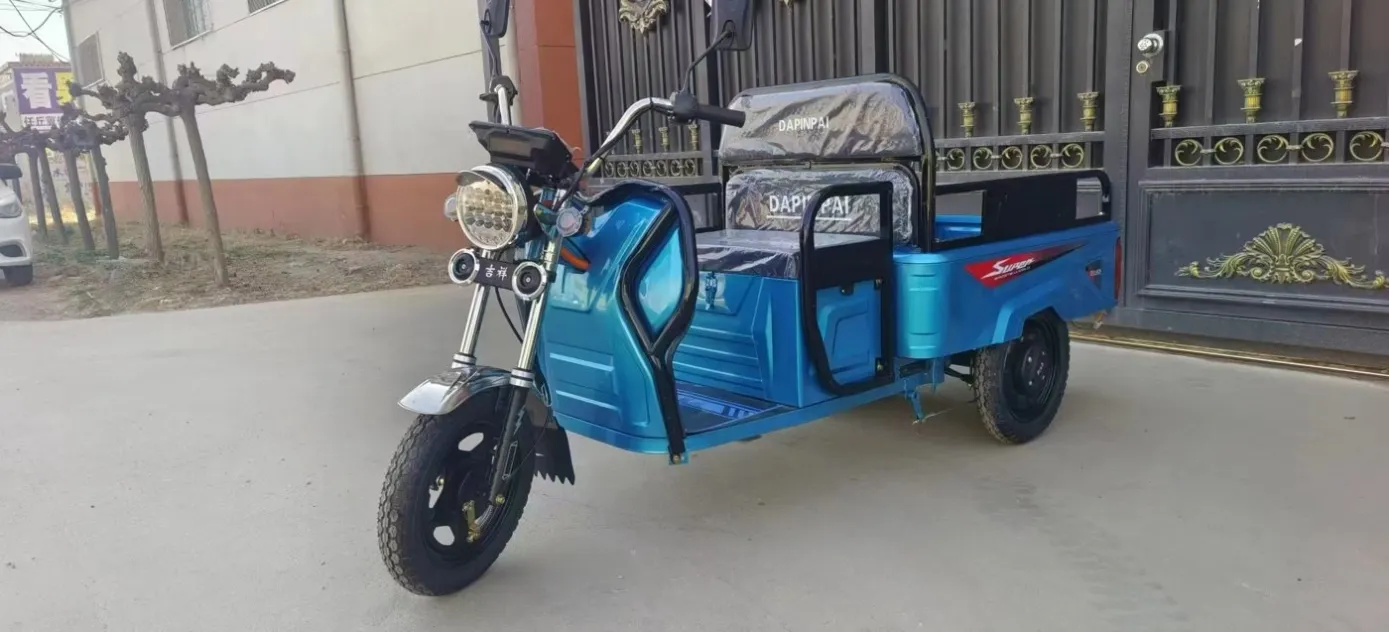
Water drums, jerry cans and gas bottles are daily cargo in areas without piped supply. Liquid loads shift as the vehicle moves, so a low, flat box floor and sensible load securing matter. Operators who carry containers all day usually prefer a plain open flat box: fast to load, easy to hose down, nothing to break.
Two details separate a good water carrier from a frustrating one. First, load securing: drums that slide on a steel floor will eventually dent the box, bruise the driver on a slope, or leave the vehicle entirely. A box with fixing points, a low rail or a simple headboard gives drivers something to strap against — ask what the box offers and confirm it in writing. Second, driving behaviour: a half-full tank load moves. Drivers who carry liquids daily learn to fill containers completely or empty them at each stop; as the seller, passing on this kind of operating guidance costs nothing and prevents a surprising share of rural accidents and complaints.
4. Rural building materials
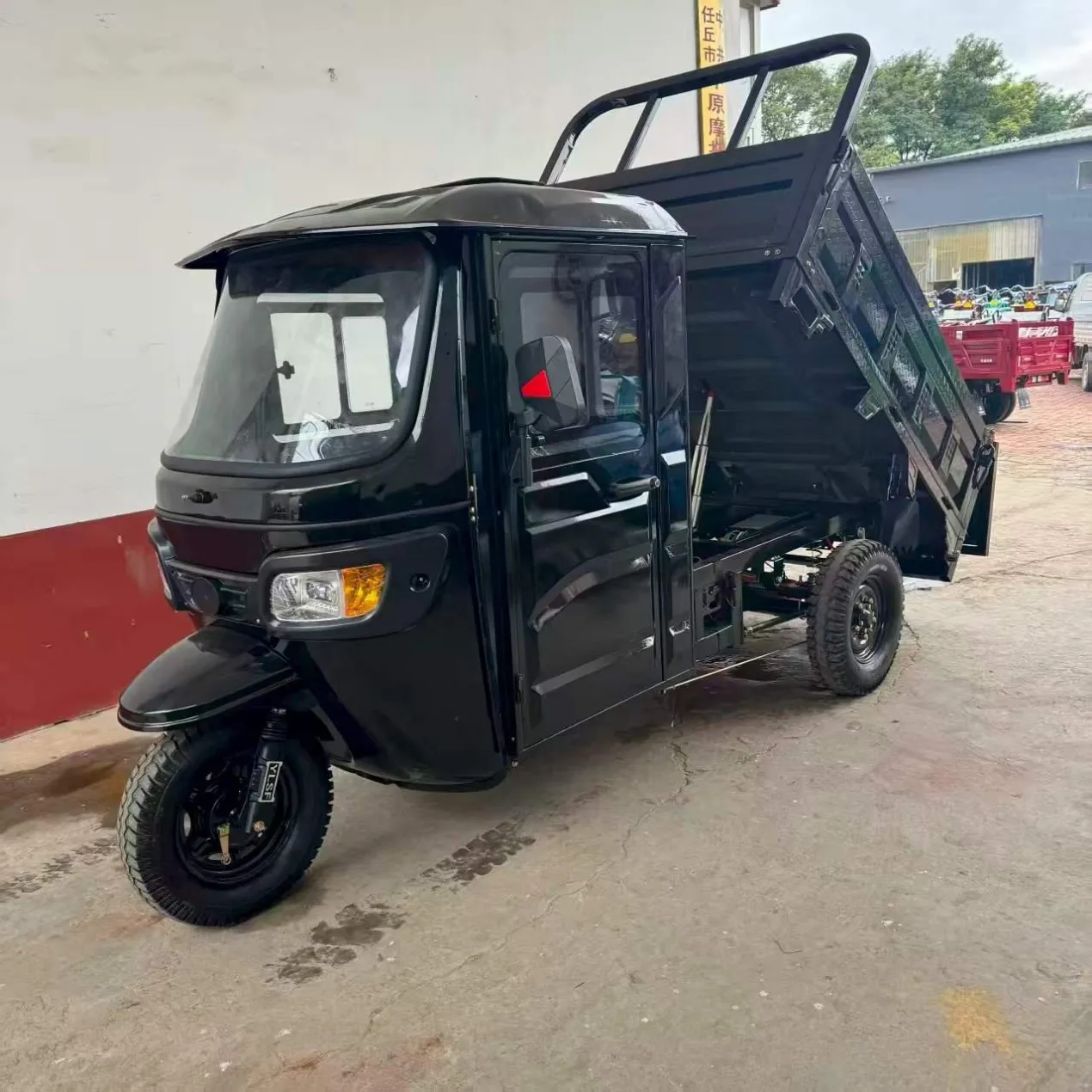
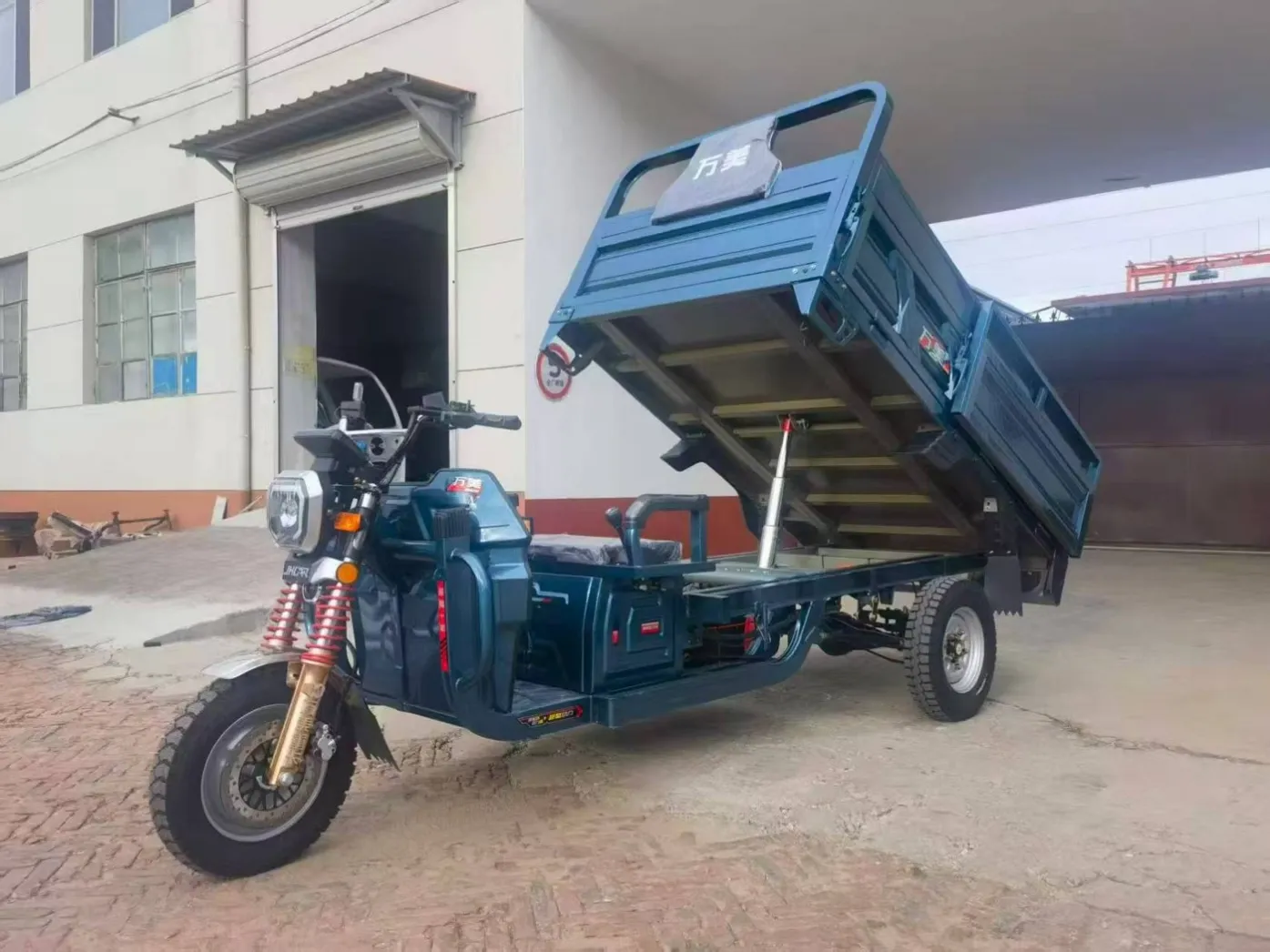
Sand, gravel, cement and bricks move short distances on village building sites — a few hundred metres to a few kilometres at a time. This is where a hydraulic dump box pays for itself: the driver tips bulk material where it is needed instead of unloading by hand, several times a day. Construction work is also the hardest on rear axles and suspension, so ask for the heavy-duty configuration rather than the lightest model.
Do the arithmetic with your customer before choosing. A builder unloading several loads of sand a day by hand spends much of the day shovelling; the dump box turns each unload into a minute at the lever. Over a season that difference can outweigh the price gap to the plain box — but only if the work really is bulk material, several times a day. For bagged cement and tools, the dump mechanism is weight and cost never used. Match the box to the unloading pattern, not the catalogue photo — and confirm in writing that the dump model you order is the heavy-duty configuration, asking which parts differ from the standard cargo model.
5. Village collection and service rounds
Milk collection, egg collection, produce buying and mobile repair services all run fixed rural rounds with many stops. Daily distance adds up even when each leg is short, so size the battery for the full loaded round plus reserve, and plan charging at the depot overnight.
Collection rounds have two traps. The first is range drift: the paper round grows as farms are added, and the vehicle that just made it in month one runs flat by month six. Size the battery for the round as it will be, with reserve. The second is stop-start wear: dozens of stops a day are harder on brakes, controllers and connectors than the same distance in one run. Brief the supplier with the round itself — stops, fullest load, road surface — not just a daily distance, confirm the battery and charger specification in writing, and make sure charging finishes comfortably between the evening return and the dawn start.
Matching the vehicle to rural work
Rough tracks and slopes call for a robust rear axle with differential, front suspension that survives potholes loaded, and a motor matched to loaded climbing rather than flat-road top speed. Tell your supplier where the vehicles will run — soil, sand, laterite, hills — not only where they will be sold, and confirm payload, box size and battery options in writing before you order.
Add three habits that separate experienced rural dealers from first-time importers:
- Test with a sample in your own conditions. Sample units are available before a bulk order — use one the way your farmers will: loaded, on their tracks, in their season if timing allows. A week of real work reveals more than any specification sheet. Ask for the sample price and lead time for the model you want.
- Order in a quantity you can support. Our MOQ is 40 pcs, and mixed models in one shipment can be discussed — confirm the combination in writing. A mixed first order lets you test which configuration your market actually wants.
- Plan parts before you need them. Shock absorbers, brake consumables, tyres and rear axle components are the rural wear items; a basic kit with the first order is far cheaper than emergency freight in harvest week.
Common mistakes we see in rural orders: choosing the lightest model for construction work, sizing the battery to the empty test ride instead of the loaded round, forgetting that liquid loads move, and ordering a dump box for bagged goods. Every one of them is avoided by the same habit — describe the real job, in writing, and let the configuration follow from it.
Talk to our team
Jiangxi Lubon supplies cargo, passenger and closed electric tricycles plus tricycle parts and accessories for B2B buyers. Our tricycles are produced at our Jiangxi production base, with branch factories in Xuzhou and Dacheng — two of China's concentrated tricycle production areas. Tell us what your customers carry and where they run, and we will recommend a configuration: saravehicle@jxlubon.com, WhatsApp +86 189 7035 3905.